How to Play Parchís: Rules, Tips & Strategy
EspañolParchís is one of the most beloved board games in Spain and Latin America. Based on the ancient Indian game Pachisi, Parchís is a race game for 2 to 4 players where luck and strategy combine to create exciting, sometimes infuriating, and always fun matches.
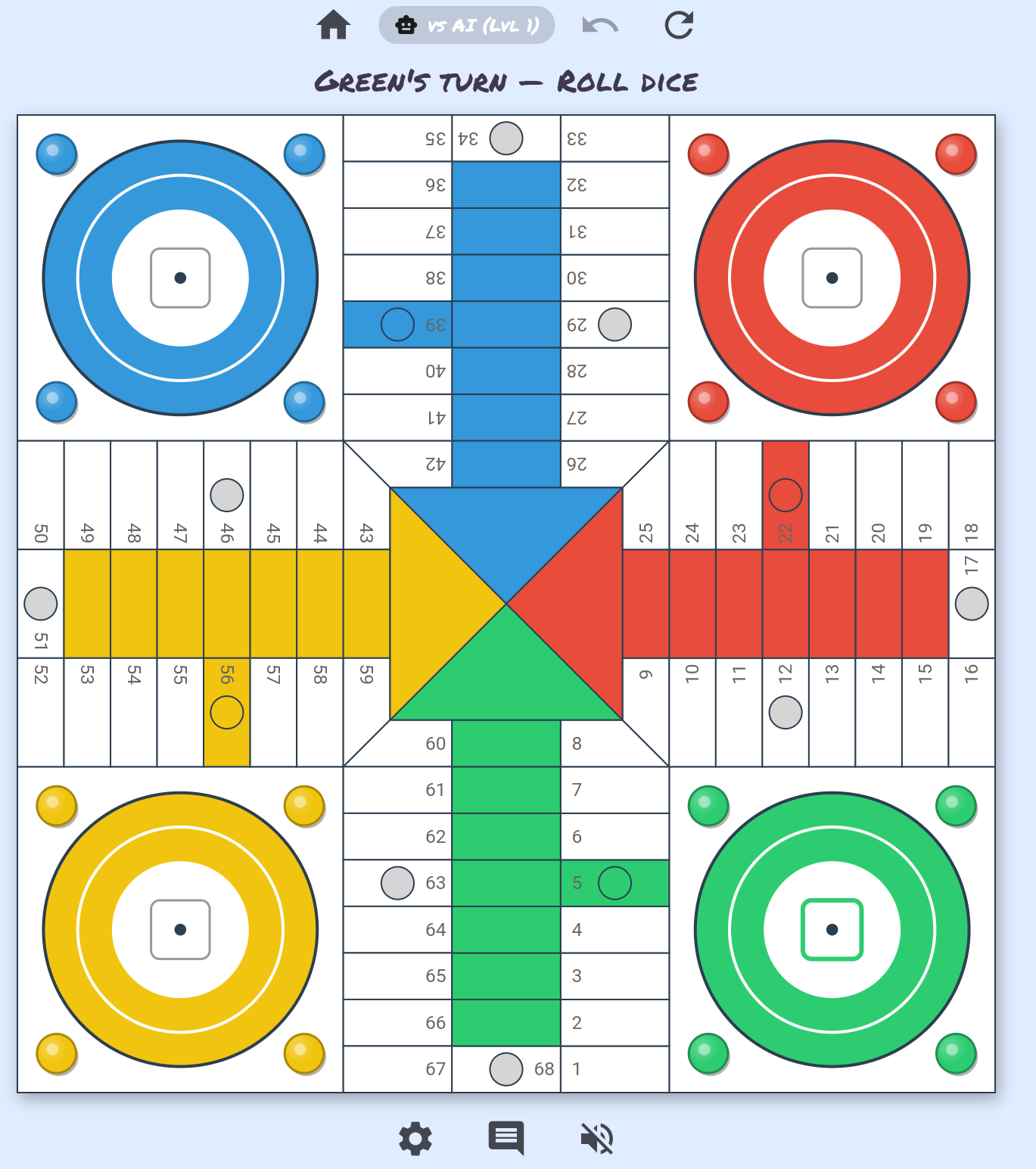
The Basics
Each player has four pieces of the same color (yellow, blue, red, or green).
The objective is simple:
move all four pieces from your starting area, around the board, and into your home before the other players.
Rules
Getting Pieces Out
To move a piece from your starting area onto the board, you must roll a 5.
Until you roll a 5, your pieces remain in the starting area.
If a blockade occupies the starting space, you cannot move a piece out until the blockade is broken.
Movement
- Players roll one die.
- Move one piece clockwise the number of spaces shown on the die.
- You must move if a legal move exists.
- If none of your pieces can move, your turn is skipped.
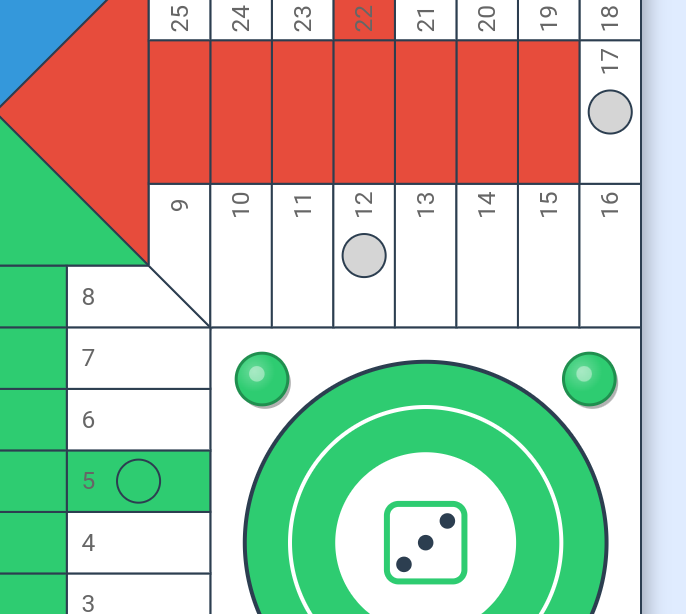
Safe Spaces
Spaces marked with a special symbol are safe zones.
Pieces on safe spaces cannot be captured.
The board contains 12 safe spaces:
- The four starting positions (one for each color)
- Eight additional spaces distributed around the board
These additional safe spaces are positioned at 7 squares and 12 squares from each starting space (two per color).
Captures
If your piece lands on a non-safe space occupied by an opponent’s piece, that piece is captured and returned to its starting area.
As a reward, you may move any one of your pieces 20 extra spaces.
Bridges
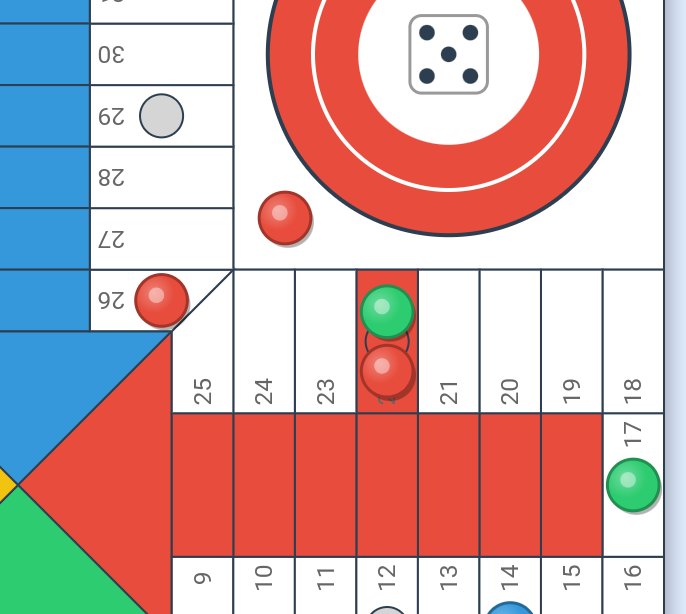
When two pieces of different colors occupy the same safe space, they form a bridge.
A bridge:
- Does not block movement — other pieces may pass through it.
- However, a third piece cannot land on the space while the bridge exists.
Bridges can only form on safe spaces, since landing on an opponent’s piece on a normal space results in a capture.
Blockades
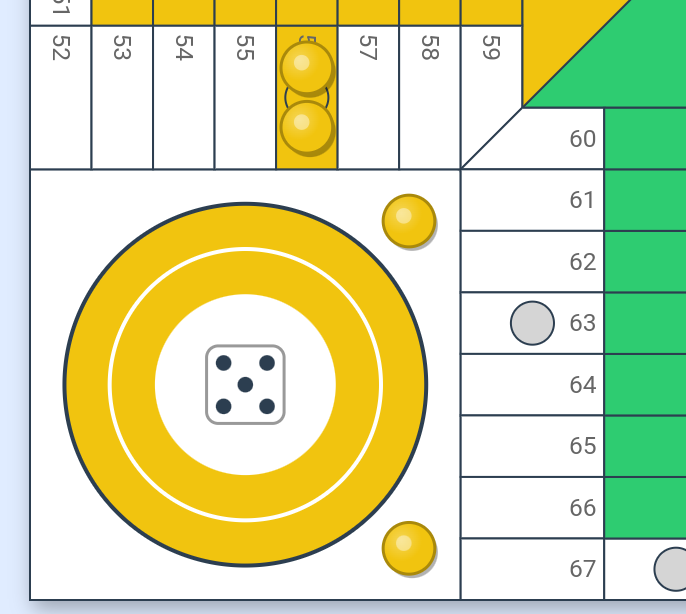
When two pieces of the same color occupy the same space, they form a blockade.
A blockade:
- Prevents any piece from passing through or landing on that space, including your own.
- Must be broken if it is your only legal move, and always when you roll a 6 (see Rolling a 6).
- If a piece cannot advance because of a blockade, it remains in place (it does not bounce back).
Blockades can form on any space, but they are most effective on safe spaces, where the individual pieces are also protected from capture when the blockade is eventually broken.
Espachurrar
A special capture can occur when a piece leaves the starting area and lands on its starting square while a bridge already exists there (two stacked pieces).
In this situation, the first opponent’s piece is captured. This special capture is known as espachurrar (“to squash”).
Unlike normal captures, it does not grant the 20-space bonus.
Entering Home
After a piece completes a full lap of the board, it enters the home column, a colored path that only that player may use.
To reach the final home square:
- You must roll the exact number needed.
- If the roll is too high, the piece does not move (no bouncing back).
When a piece reaches home, you gain a 10-space bonus move with another piece.
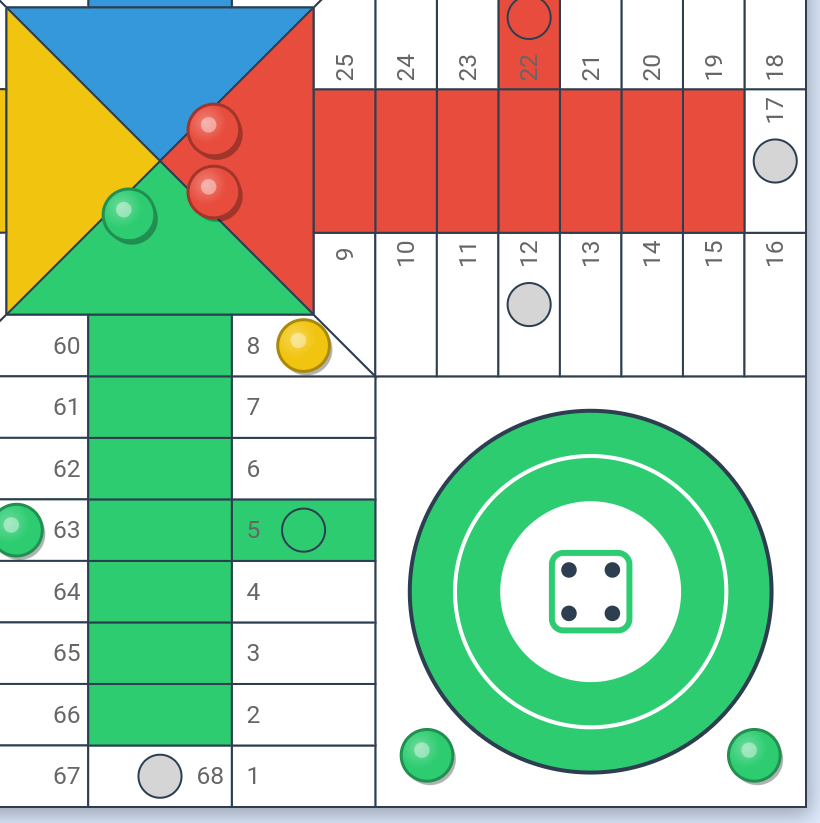
Rolling a 6
Rolling a 6 grants an extra turn.
Additional rules apply:
- If you have a blockade, you must break it when rolling a 6.
- If all four of your pieces are already in play (none left in the starting area), a roll of 6 counts as 7 spaces.
However, if you roll three 6s in a row, your last moved piece returns to the starting area as a penalty.
Exception:
- If that piece was already in the home column before the third 6, or if the third roll moves it into the home column, the penalty does not apply.
Winning Strategy
1. Spread Your Pieces
Avoid focusing on just one piece.
Having several pieces on the board gives you more movement options and more capture opportunities.
2. Use Captures Wisely
The 20-space capture bonus is powerful.
Position your pieces to threaten opponents and use the bonus to advance another piece significantly.
3. Create Blockades Strategically
Blockades can slow down opponents dramatically.
However, they may also block your own pieces, so place them carefully — especially near opponents’ starting areas or home columns.
4. Play Smart Near the End
When pieces reach the home column, use your remaining pieces on the board to capture opponents and gain bonus moves.
Those extra 20 spaces can make the difference between winning and losing.
5. Manage Risk
Your strategy should change depending on your position:
- Ahead: play safely and keep pieces on safe spaces.
- Behind: take risks and attempt aggressive captures.
Ready to Play?
The best way to learn Parchís is by playing.
Try it now:
Play Parchís online — challenge a friend or the AI and put these strategies into
practice.